May 16, 2026 • Mara Voss • 10 min reading time • Prices verified June 6, 2026
Greed and Inspired-By Car Fresheners: How Close Do They Actually Get to the Designer Original?
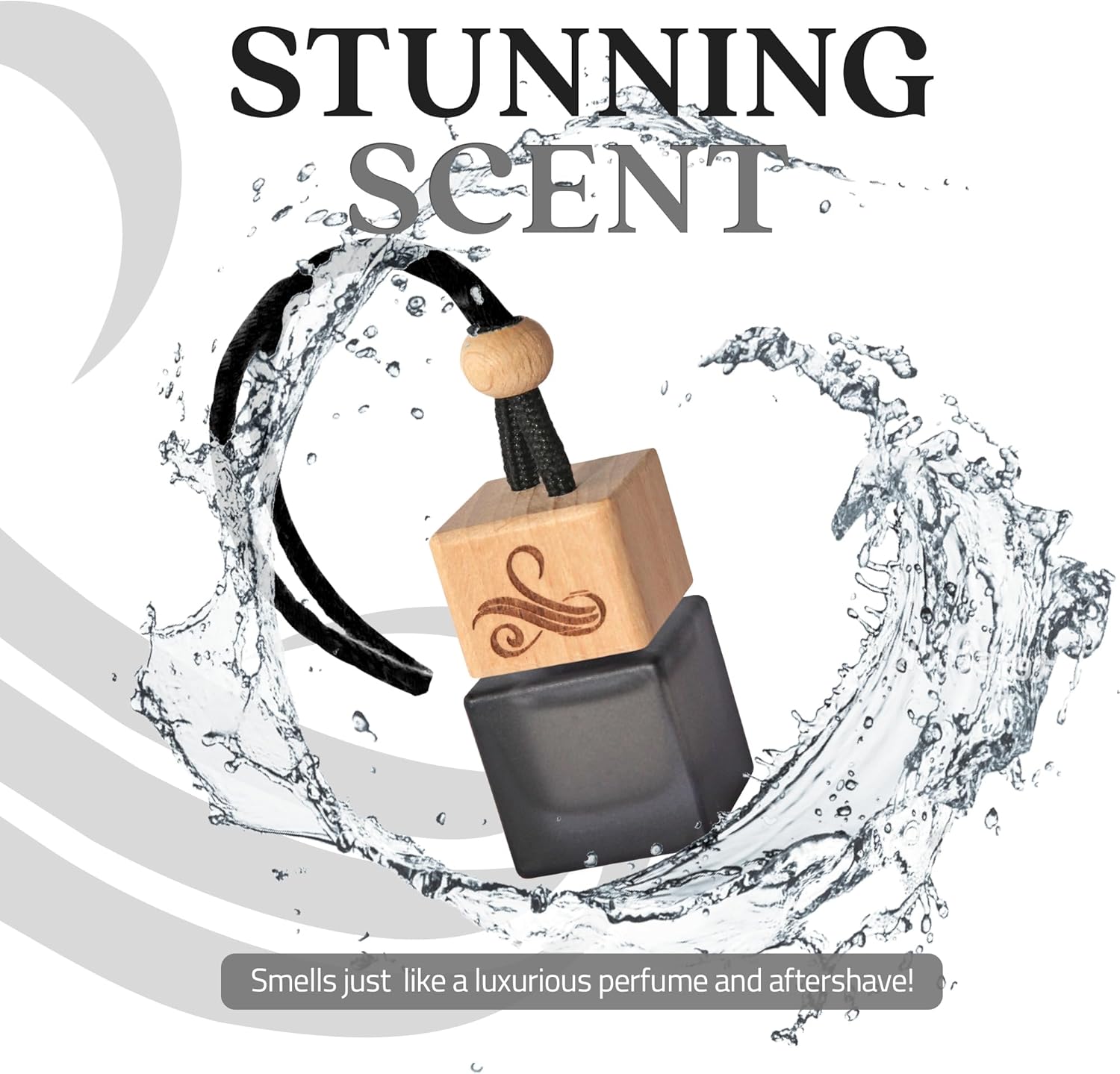
If you’ve spent any time near a car accessories shelf or scrolled fragrance forums lately, you’ve probably noticed a growing category of products marketed as “inspired by” luxury perfumes — car fresheners and diffuser refills that promise to replicate the smell of a $250–$400 designer fragrance for somewhere between $8 and $35. The pitch is obvious: why splash Creed Aventus or Maison Margiela Replica Beach Walk on your car seats when a dedicated car scent can do something similar at a fraction of the price? A “dupe” (short for duplicate) is fragrance-community shorthand for a product designed to smell like a more expensive original without carrying the original’s branding or price tag. This article is for anyone who’s already bought one of these products — or is about to — and wants a clear-eyed read on how accurate that similarity actually is, where the category shines, and where you’re being oversold.
The short answer is: closer than you’d expect in the top notes, further than you’d hope in the dry-down, and highly variable by brand. The longer answer is what follows.
What “Inspired By” Actually Means in Fragrance Terms
Let’s start with what a manufacturer can and cannot legally do. Fragrance formulas themselves are largely not patentable — what’s protected is the brand name, bottle design, and marketing. This legal gray zone is well-documented in fragrance industry circles; Basenotes.net’s long-running dupe accuracy threads cite this as the foundational reason the inspired-by market exists at scale. A manufacturer can synthesize a formula that smells similar to Creed Aventus without infringing on Creed’s trademark, as long as they’re not calling it Aventus or implying an official partnership.
What this means in practice: the inspired-by house hires a perfumer (or licenses a formula from a fragrance ingredient supplier) to hit a recognizable olfactory target. The accuracy depends entirely on the budget allocated to ingredients, the skill of the perfumer, and — critically — whether the target fragrance itself is consistent. Aventus famously has significant batch variation, a fact documented extensively in Fragrantica community reviews spanning nearly a decade of posts. Hitting a moving target is harder than hitting a fixed one, which is part of why Aventus dupes in particular generate such polarized reviews.
For car-specific formats, there’s a second layer of complexity: the delivery mechanism. A car freshener — whether a vent clip, a hanging card, a ceramic diffuser, or a refillable cartridge — diffuses scent passively or through mild heat. That changes the scent profile. Lighter top notes (citrus, aldehydic sparkle, fresh herbs) evaporate quickly and loudly in a warm cabin. Heavier base notes (musks, woods, ambers) are slower to release and may read differently in a confined space than they do on skin. The Fragrant Man’s editorial coverage of vehicle fragrance brands notes this as a consistent design challenge: a formula optimized for skin application needs reformulation to perform correctly in a car environment, and not all inspired-by car brands invest in that rework.
The Accuracy Spectrum: Where Dupes Land by Scent Family
Not all fragrance families translate equally well into car-freshener dupes. Based on aggregated patterns across Fragrantica community feedback, Basenotes discussions, and editorial coverage of the category, here’s how accuracy tends to shake out:
Fresh and aquatic scents (Replica Beach Walk, Issey Miyake L’Eau d’Issey-style): This is where inspired-by car fresheners do best. Fresh aquatics lean heavily on synthetic molecules — Calone for the oceanic note, dihydromyrcenol for the clean-laundry effect — that are relatively inexpensive and well-understood. Car freshener brands can source these at reasonable cost, and the resulting top-note accuracy is often high enough that casual users find the comparison convincing. The caveat: the dry-down (the way a scent evolves over hours on skin) is irrelevant in a car format, so you’re evaluating snapshot similarity rather than full-arc accuracy.
Woody and ambery orientals (Aventus, Dior Sauvage-style, Tom Ford Oud Wood-style): Accuracy drops significantly here. The priciest ingredients in luxury fragrances are often naturals — real oud, ambergris, civet-adjacent musks, Iso E Super in premium concentration — that cost $50–$300 per kilogram at the raw material level. Good Housekeeping’s fragrance ingredient transparency guide notes that high-quality woody and ambery fragrances rely on layered naturals that synthetic approximations struggle to fully replicate. Inspired-by car fresheners in this category often nail the broad impression (the “vibe” of an oud-wood scent) without matching the specific signature of the original. If your audience knows the original well, the gap is usually noticeable.
Florals (Chanel No. 5-style, YSL Libre-style): Results are mixed and brand-dependent. Rose and jasmine synthetics have gotten very good in the last decade, but the signature of a great floral fragrance often comes from naturals (Bulgarian rose absolute, ylang-ylang concrete) that are expensive and behave differently at diffusion temperatures typical in a hot car cabin. Reviewers in long-form Fragrantica threads consistently note that floral dupes tend to smell “soapy” or “flat” where the original is rich and dimensional.
By the Numbers: What You’re Actually Paying For
| Price Tier | Typical Format | Dupe Accuracy (Community Consensus) | Longevity in Cabin |
|---|---|---|---|
| $5–$15 | Hanging card, basic vent clip | Low–Medium (impression only) | 2–4 weeks |
| $18–$35 | Refill cartridge, ceramic vent clip | Medium (top notes convincing) | 4–8 weeks |
| $40–$80 | Refillable diffuser + premium cartridge | Medium–High (fresh/aquatic families) | 8–16 weeks |
| $80–$150+ | Bespoke subscription, artisan refillable | Variable; some genuinely close | 10–20 weeks |
The cost-per-day math matters here. A $12 hanging card lasting three weeks runs about $0.57/day. A $65 refillable cartridge lasting twelve weeks runs about $0.77/day — not dramatically more, but with meaningfully better ingredient quality and scent complexity if you’re in a family where that gap is closable. Where it gets interesting is the $80–$150 refillable hardware tier: you pay the hardware cost once, then refill at $30–$55 per cartridge. Over eighteen months, the per-day cost often lands below the mid-tier disposable option. Car and Driver’s interior accessories coverage has flagged refillable diffuser ecosystems as the area of fastest growth in premium car scent, largely because the long-run economics favor them.
The Brand Landscape: Who’s Actually Getting Close
The inspired-by car freshener market ranges from generic overseas suppliers with vague “inspired by” labeling all the way to brands that invest in proper perfumers and publish their scent-family references openly. A few names the fragrance community discusses with regularity:
Vitalize Scents has built a following among detail-oriented buyers for its refillable format and more transparent ingredient sourcing. Reviewers on fragrance forums rate its fresh and woody families as among the more accurate in the car-specific segment, though comparisons to specific luxury originals show the expected gap in base-note complexity.
Onboard Scents positions itself at the premium end of the category, with cartridge pricing in the $45–$70 range and an explicit focus on long dry-time performance in cabin environments. The Fragrant Man’s editorial coverage of vehicle fragrance brands identifies this brand as one of the few that appears to reformulate for diffusion rather than simply rebottling a personal-fragrance formula.
Pura operates as a home-and-car diffuser ecosystem with licensed brand partnerships (including some designer collaborations) rather than purely inspired-by positioning. This is a meaningfully different model: licensed scents, if the licensing is genuine, can offer closer accuracy because the brand has access to the original formula structure. Worth distinguishing from unlicensed inspired-by products when you’re advising clients.
For the mass-market tier, Little Trees and Febreze dominate on distribution and price but make no pretense of dupe accuracy — they’re selling a scent category (clean, fresh, new-car) rather than a designer reference. That’s a different value proposition and should be evaluated on its own terms.
The Tradeoffs You Need to Name Before You Buy (or Recommend)
If you’re sourcing for client vehicles or building a detail menu around fragrance, here are the explicit tradeoffs the community debates:
Accuracy vs. performance in heat: Fragrances designed for skin perform differently at 85–100°F cabin temperatures. Top notes blast off faster; base notes may go sharp or soapy. A scent that smells great out of the bottle may read as harsh or one-dimensional after twenty minutes in a hot car. Brands that test specifically for cabin diffusion have an edge here that’s not always visible in marketing copy.
Longevity vs. throw consistency: Higher oil concentration means longer life but sometimes uneven throw — the first days are overwhelming, the last week is barely perceptible. Reviewers at Basenotes.net have documented this pattern specifically in oil-saturated card-style fresheners. Refillable diffusers with adjustable-intensity settings handle this better.
Ingredient transparency vs. price: For clients with sensitivities — asthma, chemical fragrance reactions, pets in the vehicle — phthalate-free and low-VOC formulas are a real requirement, not a preference. Good Housekeeping’s fragrance ingredient transparency guide outlines the key markers to look for on product labels or safety data sheets. Not all inspired-by brands publish this information readily; those that do earn an advantage with the sensitivity-aware buyer.
Dupe marketing vs. original purchase: This is worth saying plainly. For buyers who know the original fragrance very well, most inspired-by car fresheners will be obvious approximations rather than convincing replicas. The value proposition is not fooling a fragrance expert — it’s delivering a pleasant, elevated scent experience that nods toward a reference most people in the car will recognize as “luxurious.” That’s a real and legitimate value at the right price. It just needs to be communicated honestly, especially if you’re recommending to clients.
The Decision Frame: If X, Then Y
Here’s where to land based on your situation:
If your client knows the original fragrance and will notice the difference: Don’t lead with dupe accuracy claims. Position the car scent as “inspired by the family” of the original rather than a replica. Choose a brand in the $40–$80 tier that reformulates for cabin diffusion (Onboard Scents, Vitalize Scents upper tier). Set expectations at “complementary” not “identical.”
If your client cares about long-term cost and refillability: The refillable hardware ecosystem wins clearly over eighteen months. Budget $80–$120 for the hardware upfront and $35–$55 per refill. The cost-per-day math typically beats the mid-tier disposable market by month four.
If you’re stocking a detail menu for volume work: Fresh and aquatic families offer the best accuracy-to-cost ratio and the lowest risk of client complaints. Avoid heavily oriental or oud-heavy dupes unless you’re confident the client doesn’t know the reference well.
If ingredient transparency is a hard requirement: Filter first by phthalate-free and low-VOC certification, then choose on accuracy. Pura and Vitalize Scents both publish ingredient safety information more readily than most in this category. That narrows your field before you evaluate scent match.
If the buyer is a first-time car freshener buyer just exploring the category: The honest answer is that a well-chosen $12–$18 mid-tier freshener in a scent family they like will make them happier than an $8 dupe of a fragrance they’ve never smelled. Accuracy is only valuable when the reference means something to the buyer. Start with scent family; get into designer references when they’re ready.
The inspired-by car freshener market is genuinely interesting and improving. But it rewards buyers who understand what they’re evaluating — and penalizes those sold on a promise of perfect replication. Know the gap, name it honestly, and the right pick becomes much clearer.