May 26, 2026 • Mara Voss • 9 min reading time • Prices verified June 6, 2026
Little Trees Multipacks: The $5–$18 Hanging Freshener Math That Mass-Market Buyers Always Get Wrong
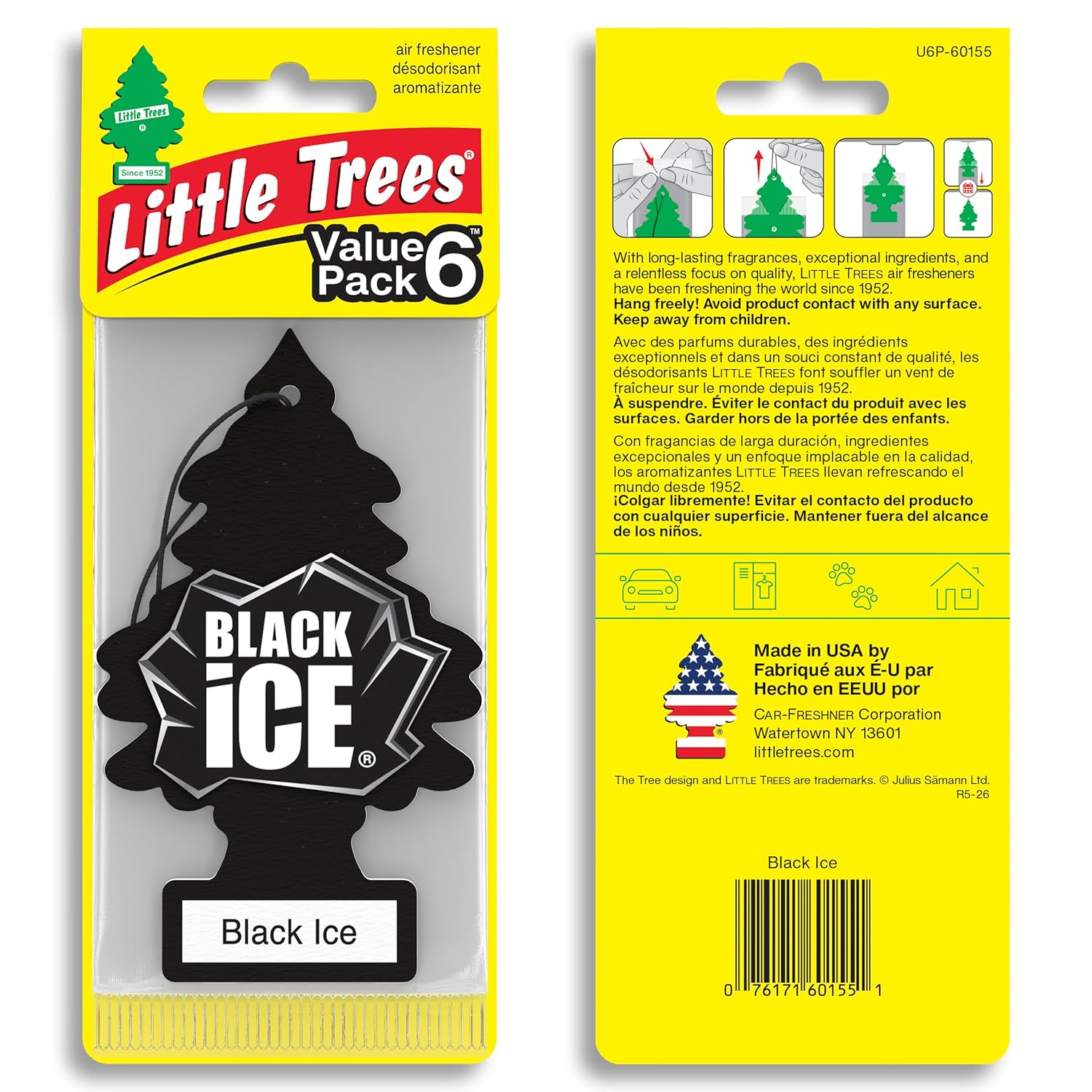
If you’ve ever stood in an auto-parts aisle holding a 24-pack of Little Trees for $14.99 and thought this is obviously a good deal — you’re not wrong, exactly. But the math most buyers run in that moment skips the variable that actually controls value: how fast a single tree loses its scent throw in your specific car. Little Trees (made by Car-Freshner Corporation since 1952) are cardboard-based hanging fresheners — the kind shaped like a pine tree, soaked in fragrance oil, and sealed in a plastic envelope until you’re ready to use them. A “multipack” is any retail bundle of three or more units, typically running $5 for a 3-pack up to roughly $18 for a 24-count club-store bundle. This guide walks through the real cost-per-day arithmetic, the packaging decisions that quietly shorten or extend fragrance life, and the clear decision rules for whether a multipack is actually the right format for your situation — or whether you’re just buying more of the wrong thing in bulk.
| EDITOR'S PICK[LITTLE TREES Car Air Freshener](https://www.amazon.com/dp/B00LM54ZD0?tag=greenflower20-20)… | Mid-tier[Little Trees Vent Wrap Air Fres](https://www.amazon.com/dp/B0F2BC5NMG?tag=greenflower20-20)… | Budget pick[LITTLE TREES Car Air Freshener](https://www.amazon.com/dp/B083FVSKMF?tag=greenflower20-20)… | |
|---|---|---|---|
| Form factor | Hanging tree | Vent wrap | Vent wrap |
| Scent variant | Black Ice | Black Ice | Caribbean Colada |
| Total count | 24 | 16 | 16 |
| Pack count | — | 4 (4-pack) | 4 (4-pack) |
| Long lasting | ✓ | — | ✓ |
| Price | $18.99 | $11.80 | $9.50 |
| See on Amazon → | See on Amazon → | See on Amazon → |
The Packaging Variable Nobody Reads on the Label
Here’s the friction point that trips up most multipack buyers: the freshener’s scent life begins the moment the outer plastic envelope is compromised, not the moment you hang it in the car.
Car-Freshner Corporation’s own product guidance (cited across Car and Driver’s 2025 buyer’s guide and Good Housekeeping’s 2024 air freshener roundup) rates Little Trees at approximately four weeks of fragrance under typical conditions. What “typical” means in the manufacturer’s framing is a temperate-climate vehicle with moderate airflow exposure. It does not mean a Florida dashboard in July, a New York winter car left at 10°F overnight, or a vehicle whose owner runs the blower on high because they hate fogged windows.
The more critical variable: sealed versus unsealed storage. Each individual Little Tree ships in its own foil-lined plastic pouch. That pouch is doing real work — it’s slowing the off-gassing of the fragrance oil so the scent reserve is intact when you open it. Reviewers on Basenotes.net’s owner-experience threads consistently report that trees purchased from high-turnover retail (grocery checkouts, gas stations with fast inventory rotation) perform noticeably better than the same SKU bought from a slow-moving bin or a club-store multipack that has sat in a distribution warehouse for six-plus months before hitting a shelf.
This matters for the math. A 24-pack of Little Trees has a nominal fragrance life — if every unit is fully intact — of roughly 24 × 4 weeks = 96 weeks of coverage, or nearly two years of continuous use. But if the outer multipack packaging has micro-perforations or the cardboard box breathes even slightly, owner reports suggest meaningful fragrance degradation on interior units after about six months in storage, regardless of whether the individual foil pouches remain visually sealed. The foil pouch is the last line of defense; the outer box is not airtight.
What this means practically: A 24-pack bought from Amazon with fast Prime turnover and stored in your climate-controlled garage is probably fine. A 24-pack bought on clearance from a retailer that ordered heavy for a promotion six months ago is a gamble.
The Actual Cost-Per-Day Math (And Where It Breaks Down)
Let’s run the numbers buyers almost never bother to do.
By the numbers — retail multipack comparison (May 2026 pricing)
| Format | Typical Street Price | Units | Cost Per Unit | Rated Life | Cost Per Day |
|---|---|---|---|---|---|
| Single tree (checkout impulse) | $1.49–$1.99 | 1 | ~$1.75 avg | 4 weeks | ~$0.063 |
| 3-pack (standard retail) | $4.99–$5.99 | 3 | ~$1.83 avg | 4 weeks | ~$0.065 |
| 6-pack (mid-tier multipack) | $7.99–$9.99 | 6 | ~$1.50 avg | 4 weeks | ~$0.054 |
| 24-pack (club store / online) | $13.99–$17.99 | 24 | ~$0.65 avg | 4 weeks | ~$0.023 |
On paper, the 24-pack wins decisively — roughly one-third the per-day cost of a single-unit checkout purchase. But the rated-life figure in that table is load-bearing, and it’s the number most buyers accept uncritically.
Owner reports aggregated from Basenotes.net’s discussion threads and the Car and Driver buyer’s guide both note that real-world scent throw — meaning the moment when the freshener is strong enough that a passenger notices it without leaning in — typically runs two to two-and-a-half weeks in warm climates and in vehicles driven with recirculated air (which reduces fresh-air exchange and actually speeds localized scent saturation). After that window, the tree continues releasing fragrance oil at a declining rate, but most owners describe it as “background” level: detectable up close, invisible to a fresh nose entering the vehicle.
If your effective threshold for “working freshener” is two weeks rather than four, the 24-pack math adjusts:
- Effective cost per day at 2-week life, 24-pack: ~$0.046/day
- Effective cost per day at 2-week life, 6-pack: ~$0.107/day
- Effective cost per day at 2-week life, single: ~$0.125/day
The 24-pack still wins on per-day cost — but only if you’re actually consuming units at the pace needed to use them before warehouse-storage degradation sets in. A solo commuter driving a compact sedan who replaces on a 3-week cycle will take roughly 72 weeks (nearly 18 months) to exhaust a 24-pack. That’s uncomfortably close to the 6-month shelf-life risk window for uncontrolled storage conditions.
Scent Selection Risk in Bulk Buying
There’s a second tax on multipack buying that the dollar math alone doesn’t capture: scent commitment.
Little Trees’ catalog spans roughly 50+ active scents as of 2026, ranging from the iconic Black Ice (a musk-forward masculine-leaning profile that Basenotes community members consistently describe as the closest mass-market analog to a synthetic sandalwood-amber) to Caribbean Colada and Vanillaroma. These are not interchangeable. A driver who buys a 24-pack of one scent to maximize per-unit savings is betting on two things: (1) that they won’t experience scent fatigue — olfactory adaptation (the phenomenon where your nose stops registering a constant background smell) — and (2) that their household passengers will share the preference for the next 18 months.
Consumer Reports’ overview of air freshener safety and usage patterns notes that olfactory adaptation is nearly universal with continuous single-note exposure in enclosed spaces, typically setting in within two to four weeks of consistent exposure. In practical terms: many Little Trees buyers who go all-in on a 24-pack of one scent report that they stop noticing the fragrance entirely by week three — and then overcorrect by doubling up units, burning through the pack faster than the math assumed, and negating the per-unit savings.
The practitioner fix: Mixed-scent multipacks, where available, partially address this. The 6-pack assortment SKUs (available through several online retailers and some auto-parts chains) let you rotate scent profiles on a two-to-three-week schedule, which keeps the olfactory system from adapting fully. The per-unit cost is higher than the 24-pack, but effective scent delivery per day is meaningfully better for most drivers.
Health Flags Worth Naming Out Loud
Consumer Reports’ air freshener safety overview and Detailing Wiki’s interior odor management entry both flag the same issue: hanging fresheners are among the higher-VOC (volatile organic compound — airborne chemicals released from scented products) formats in the car freshener category, by virtue of open passive diffusion with no flow-rate control mechanism.
This is a meaningful consideration for three user groups who show up consistently in our audience:
Pet owners. Dogs and cats have olfactory systems many times more sensitive than humans. An intensity that registers as “pleasant background” to a human driver can be overwhelming at close range to a dog riding in the rear seat or cargo area. Owner reports in Basenotes community threads suggest keeping hanging fresheners toward the front cabin and out of direct airflow paths toward rear passenger and cargo zones when animals are present.
Asthmatics and fragrance-sensitive riders. Little Trees does not currently publish a full ingredient disclosure for its fragrance compounds. Car and Driver’s buyer’s guide notes this as a limitation and flags it for buyers with documented fragrance sensitivities. If this is a household concern, phthalate-free and low-VOC vent-clip formats from brands that publish ingredient lists (several in the $8–$15 range) are a more defensible choice even at a higher per-day cost.
Professional detailers and mobile car-spa operators. Detailing Wiki’s interior odor management entry is explicit on this: hanging fresheners are widely considered a short-term customer-delivery tool, not an odor elimination solution. They mask; they do not neutralize. Using a Little Tree as the final scent step on a detailed vehicle is industry-standard and cost-efficient. Using it as a substitute for ozone treatment or enzymatic odor neutralization on a smoke- or pet-odor vehicle is a client service risk, regardless of how many units you hang.
The Decision Rule
If you’ve read this far, you’re now equipped to apply the actual decision framework:
If you drive daily, rotate scents monthly, store extras in a climate-controlled space, and consume a 6-pack in 10–12 weeks — the 24-pack math works. Buy the club-store bundle, store it sealed in a cool interior location, and your effective cost per scented day is genuinely hard to beat in the mass-market freshener category.
If you drive less than 10,000 miles a year, prefer variety over a single scent, or have fragrance-sensitive passengers — the 6-pack assortment is the better buy. The per-unit premium over the 24-pack is real but modest, and you get meaningful scent-rotation flexibility without the shelf-degradation risk.
If you’re a professional detailer sourcing for client vehicles — buy the 24-pack for cost efficiency, store per unit in original foil pouches inside a sealed container, and treat it as a delivery-presentation layer only. Do not position it as odor elimination to clients. Your per-unit cost at 24-pack scale (roughly $0.65/unit at May 2026 pricing) is defensible as a line-item on a detail invoice; six units at checkout pricing is not.
And if you’re finding that trees lose noticeable throw in under two weeks in your specific vehicle — a hot-climate car, a high-airflow cabin, or a truck cab with poor door seals — the per-day math inverts hard enough that a vent-clip format with a sealed reservoir and adjustable flow rate will outperform a bulk hanging-freshener purchase at essentially any multipack price point. The $5 Little Trees multipack is a great product in the right use case. The math just has to actually work before you buy 24 of them.